

Key Features of Warehouse Management System: Complete Business Guide
key features of warehouse management system is more than a tool for tracking inventory. It helps businesses organize warehouse operations, improve inventory accuracy, and manage product movement from receiving to dispatch. As warehouse activities become more complex, the features available within a warehouse management system have a direct impact on operational efficiency, customer service, and business performance.
Many businesses compare software based on price or the number of available features. However, not every feature delivers the same business value. The right warehouse management system should solve operational challenges such as inventory inaccuracies, delayed order fulfilment, inefficient storage, and limited warehouse visibility. Understanding which features support daily warehouse operations makes it easier to choose a solution that matches both current requirements and future business growth.
Modern warehouse operations also require information to flow between purchasing, inventory control, warehouse teams, and management. A well-designed Warehouse Management System brings these activities together, allowing inventory movements to update automatically while providing real-time visibility into warehouse operations. Businesses looking for complete operational control often integrate warehouse activities with Inventory Management Software Dubai, creating a centralized platform for inventory, purchasing, warehouse management, and reporting.
This guide explains the key features every warehouse management system should provide, why those features matter, and how they contribute to more efficient warehouse operations.
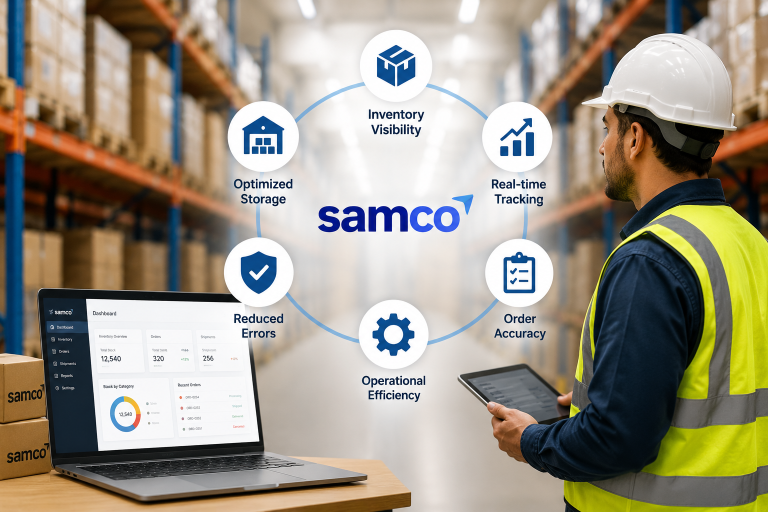
What Is a Warehouse Management System and key features of warehouse management system?
A Warehouse Management System (WMS) is a software solution that helps businesses manage and optimize daily warehouse operations. It controls how inventory is received, stored, moved, picked, packed, and dispatched, while maintaining accurate inventory records throughout every stage of the warehouse process.
Unlike basic inventory tracking tools, a warehouse management system focuses on the physical movement of products inside the warehouse. It helps warehouse teams organize storage locations, streamline picking routes, monitor inventory movement, and improve order fulfilment. As a result, businesses can process orders faster, reduce manual errors, and make better use of available warehouse space.
A modern Warehouse Management System also provides real-time visibility into warehouse activities. Every inventory movement is recorded as it happens, allowing warehouse staff, purchasing teams, and managers to work with accurate information. This reduces inventory discrepancies, prevents misplaced products, and improves decision-making across the business.
While a warehouse management system focuses on warehouse operations, it becomes even more effective when integrated with Inventory Management Software Dubai. This allows purchasing, inventory control, warehouse operations, sales, and reporting to work together within one connected platform, eliminating duplicate data entry and improving operational efficiency.
For businesses managing larger warehouses or multiple locations, combining a warehouse management system with a Warehouse Tracking System provides greater visibility into inventory movement and product locations. This helps employees locate stock quickly, monitor warehouse performance, and maintain accurate inventory across every warehouse.
A warehouse management system creates a structured warehouse environment where inventory is controlled, warehouse processes are standardized, and business operations become more efficient as inventory volumes continue to grow.
Why Warehouse Management System Features Matter
The effectiveness of a warehouse management system depends on more than simply managing inventory. The features available within the system determine how efficiently warehouse operations are performed, how accurately inventory is maintained, and how quickly customer orders are processed. Choosing software with the right capabilities helps businesses improve productivity while reducing operational challenges.
As warehouse operations become more complex, employees need access to accurate, real-time information. Features such as inventory visibility, warehouse location management, barcode scanning, and automated workflows help reduce manual work while improving inventory accuracy. Instead of relying on paper records or spreadsheets, warehouse teams can process inventory using standardized procedures that reduce errors and improve consistency.
Warehouse features also improve decision-making. Managers can monitor inventory movement, identify slow-moving products, evaluate warehouse performance, and make informed purchasing decisions using accurate operational data. Businesses that combine these capabilities with a Warehouse Tracking System gain greater visibility into product movement, making it easier to locate inventory and monitor warehouse activity in real time.
Another important consideration is business growth. Warehouse requirements often change as inventory volumes increase or additional warehouse locations are introduced. Choosing a solution that supports integration with Inventory Management Software Dubai allows purchasing, inventory control, warehouse operations, and reporting to work together without creating separate systems or duplicate records.
The right warehouse management system features not only improve daily warehouse operations but also create a scalable foundation that supports long-term operational efficiency and business growth.
Essential Features of a Warehouse Management System
A warehouse management system is designed to improve the way inventory moves through the warehouse. While every business has different operational requirements, certain features are essential for maintaining inventory accuracy, improving warehouse efficiency, and supporting business growth. Understanding these capabilities helps businesses choose a solution that matches their operational needs rather than simply comparing software based on the number of available features.
Receiving and Put-away Management
The receiving process is the starting point of every warehouse operation. A warehouse management system records incoming goods, verifies quantities, and assigns products to the most appropriate storage locations. Structured put-away procedures reduce warehouse congestion, improve space utilization, and make products easier to locate during future warehouse activities.
Real-Time Inventory Visibility
Accurate inventory information is essential for effective warehouse operations. Every inventory movement, including receiving, transfers, picking, and dispatch, should update stock records immediately. This allows warehouse teams to locate products quickly, monitor inventory levels, and reduce stock discrepancies before they affect customer orders.
Warehouse Location Management
A well-organized warehouse depends on accurate location control. Warehouse location management records where every product is stored, making it easier for employees to find inventory and complete order picking efficiently. Businesses operating larger facilities often improve this process by implementing a Warehouse Tracking System, which provides real-time visibility into inventory movement and product locations.
Barcode and RFID Integration
Barcode and RFID technologies improve inventory accuracy by reducing manual data entry. Barcode Inventory Management allows employees to scan products during receiving, storage, picking, and dispatch, ensuring inventory records remain accurate throughout warehouse operations. Businesses handling larger inventory volumes or automated warehouse environments may also integrate an RFID Inventory Tracking System to identify multiple products simultaneously and improve operational efficiency.
Order Picking and Packing
Order fulfilment is one of the most important warehouse activities. A warehouse management system guides employees through optimized picking routes, reducing travel time while improving picking accuracy. Packing processes can also be standardized to ensure customer orders are prepared correctly before dispatch.
Reporting and Performance Monitoring
Warehouse reports provide valuable insights into inventory movement, warehouse productivity, stock turnover, order fulfilment performance, and inventory accuracy. Managers can use this information to identify operational improvements, monitor warehouse efficiency, and make better purchasing and inventory planning decisions.
Together, these features create a structured warehouse environment that improves inventory control, supports efficient warehouse operations, and prepares businesses for future growth.
Warehouse Management System Functions Explained
A warehouse management system supports every stage of warehouse operations by organizing inventory movement through a structured workflow. Each function is designed to improve inventory accuracy, reduce manual work, and ensure products move efficiently from receiving to customer delivery. Understanding these functions helps businesses evaluate whether a warehouse management system can support their operational requirements.
Receiving Inventory
Warehouse operations begin when goods arrive from suppliers. A warehouse management system records incoming shipments, verifies product quantities, and confirms inventory before products are accepted into the warehouse. This reduces receiving errors and ensures inventory records remain accurate from the beginning of the warehouse process.
Storage and Put-away
Once inventory has been received, products are assigned to designated storage locations based on warehouse rules. Organizing inventory in structured locations improves space utilization and makes products easier to locate during future warehouse activities. Businesses that combine this process with a Warehouse and Inventory Management strategy maintain better inventory organization while improving warehouse efficiency.
Inventory Movement and Tracking
Inventory often moves between storage areas, picking locations, or different warehouse facilities. A Warehouse Tracking System records every movement, ensuring inventory locations remain accurate and warehouse staff can locate products quickly without unnecessary searching.
Order Picking and Packing
When customer orders are received, the warehouse management system generates picking tasks based on product locations. This reduces travel time inside the warehouse while improving picking accuracy. After products are picked, packing processes verify order contents before shipment, helping businesses reduce shipping errors and improve customer satisfaction.
Dispatch and Shipping
Before inventory leaves the warehouse, shipments are verified and inventory records are updated automatically. This ensures stock availability remains accurate while providing customers with reliable order fulfilment.
Reporting and Performance Analysis
Warehouse management systems also generate reports that help businesses evaluate inventory movement, warehouse productivity, order fulfilment performance, and stock accuracy. These insights allow managers to identify operational improvements, monitor warehouse performance, and make informed business decisions using reliable data.
By connecting these warehouse functions into one continuous workflow, businesses improve operational efficiency, maintain accurate inventory records, and create a more organized warehouse environment.
Benefits of Choosing the Right Warehouse Management System
A warehouse management system should do more than organize warehouse activities. It should help businesses improve inventory accuracy, increase operational efficiency, and create a warehouse environment that supports long-term growth. Choosing a solution with the right capabilities allows businesses to streamline daily operations while maintaining better control over inventory and warehouse performance.
Improve Inventory Accuracy
Accurate inventory information is essential for purchasing, sales, and warehouse operations. A warehouse management system records every inventory movement in real time, reducing manual entry errors and helping businesses maintain reliable stock levels. This minimizes stock shortages, prevents overstocking, and improves inventory planning.
Increase Warehouse Productivity
Warehouse teams perform more efficiently when tasks follow a structured workflow. Automated receiving, storage, picking, packing, and dispatch reduce unnecessary movement inside the warehouse and help employees complete more work within the same amount of time. Businesses can further improve warehouse efficiency by combining these processes with a Warehouse Tracking System, allowing employees to locate inventory quickly and reduce delays during order fulfilment.
Better Inventory Visibility
Real-time visibility gives managers complete control over inventory across one or multiple warehouse locations. Accurate inventory information makes it easier to monitor stock movement, identify slow-moving products, and respond quickly to changing customer demand. Businesses using Inventory Management Software Dubai can also connect warehouse operations with purchasing, inventory control, and reporting, ensuring every department works with the same up-to-date information.
Lower Operating Costs
Manual warehouse processes often result in inventory discrepancies, duplicate purchases, unnecessary labour, and inefficient use of warehouse space. A warehouse management system reduces these operational costs by improving inventory control, standardizing warehouse workflows, and minimizing manual intervention.
Support Business Growth
As businesses expand, warehouse operations become more complex. A scalable Warehouse Management System provides the flexibility to manage additional products, warehouse locations, users, and inventory volumes without disrupting daily operations. This helps businesses grow while maintaining consistent warehouse performance and inventory accuracy.
Choosing the right warehouse management system is an investment in operational efficiency. The right solution improves daily warehouse performance while creating a strong foundation for future business expansion.
Barcode and RFID Integration in Warehouse Management
Accurate product identification is essential for efficient warehouse operations. Barcode and RFID technologies help warehouse management systems capture inventory information quickly, reduce manual data entry, and improve inventory accuracy throughout receiving, storage, picking, and dispatch. When integrated with a warehouse management system, both technologies provide better visibility into inventory movement while supporting faster warehouse operations.
Barcode Integration
Barcode technology is widely used because it is practical, reliable, and easy to implement. Every product is assigned a unique barcode that can be scanned during receiving, storage, stock transfers, picking, packing, and shipping. Each scan automatically updates inventory records, reducing manual entry errors and helping warehouse teams maintain accurate inventory information.
Businesses implementing Barcode Inventory Managementcan improve inventory accuracy while reducing the time required for routine warehouse tasks such as stock verification, cycle counting, and order fulfilment. GS1 Standards
RFID Integration
RFID uses radio frequency tags instead of printed barcode labels. Unlike barcode scanning, RFID readers can detect multiple tagged items simultaneously without requiring a direct line of sight. This makes RFID suitable for warehouses handling high inventory volumes, automated storage systems, or operations where inventory moves quickly throughout the warehouse.
An RFID Inventory Tracking System helps businesses monitor inventory movement in real time, improve warehouse visibility, and reduce manual scanning activities across larger warehouse environments.
Choosing the Right Technology
Both technologies improve warehouse operations, but the right choice depends on business requirements. Barcode technology is well suited for most warehouses because it offers an affordable and accurate inventory tracking solution. RFID becomes more beneficial when businesses require higher levels of automation, faster inventory identification, or real-time tracking across large warehouse facilities.
Before implementing barcode or RFID technology, businesses should ensure product identification follows internationally recognised GS1 Standards. Standardized barcodes improve compatibility across suppliers, warehouse operations, and inventory management systems while supporting consistent product identification throughout the supply chain.
Barcode vs RFID Comparison
| Barcode | RFID |
|---|---|
| Individual barcode scanning | Multiple items detected simultaneously |
| Lower implementation cost | Higher initial investment |
| Simple implementation | Advanced warehouse environments |
| Suitable for most warehouses | Ideal for high-volume operations |
| Requires direct scanning | No direct line of sight required |
Industries That Benefit from Warehouse Management Systems
Warehouse management systems are used across many industries because every business that stores, moves, or distributes products depends on accurate inventory information and efficient warehouse operations. While operational requirements vary between industries, the objective remains the same—improve inventory accuracy, streamline warehouse workflows, and deliver products efficiently.
Retail
Retail businesses manage large product catalogues, seasonal inventory, and frequent stock movement. A warehouse management system helps organize inventory, improve replenishment, and maintain accurate stock availability. This allows retailers to fulfil customer orders faster while reducing stock shortages and excess inventory.
Wholesale and Distribution
Wholesale businesses process high volumes of incoming and outgoing inventory every day. Efficient receiving, storage, order picking, and dispatch are essential for maintaining customer service levels. Integrating a Warehouse Tracking System allows warehouse teams to monitor inventory movement in real time, locate products quickly, and improve order fulfilment accuracy.
Manufacturing
Manufacturers manage raw materials, work-in-progress inventory, and finished goods throughout the production cycle. Warehouse management features help maintain material availability, improve warehouse organization, and support uninterrupted production. Businesses with complex production environments often implement Manufacturing Inventory Management Software to improve inventory control from raw materials to finished products.
Factory Operations
Factories depend on continuous access to production materials, spare parts, packaging supplies, and finished inventory. A Factory Inventory Management Software solution helps organize warehouse operations, improve material availability, and reduce production delays caused by inventory shortages or misplaced stock.
Logistics and Third-Party Warehousing
Logistics providers and third-party warehouses handle inventory for multiple customers while processing continuous inbound and outbound shipments. Integrating warehouse operations with Inventory Management Software Dubai provides centralized inventory visibility, improves warehouse coordination, and supports accurate reporting across multiple warehouse locations.
Regardless of industry, a warehouse management system helps businesses improve inventory control, increase warehouse productivity, and create a scalable warehouse operation that supports future business growth.
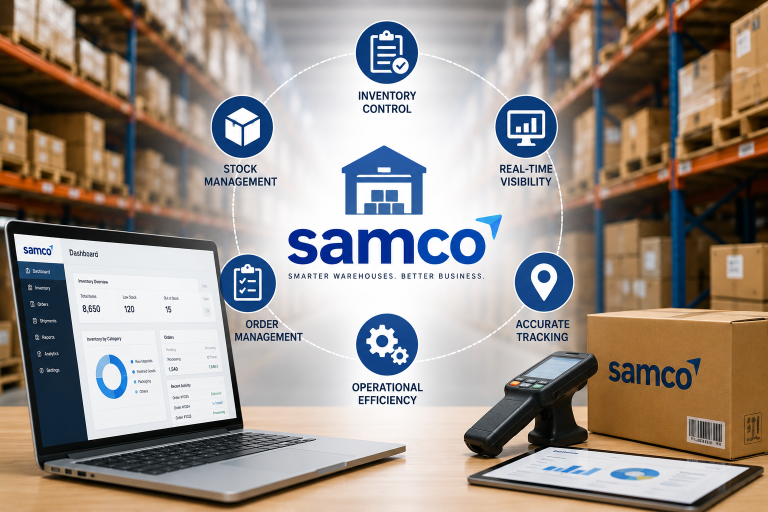
How to Choose the Right Warehouse Management System
Choosing a Warehouse Management System is more than comparing software features or pricing. The right solution should support your warehouse operations, improve inventory accuracy, and continue meeting business requirements as your organization grows. Before selecting a system, evaluate how well it fits your warehouse processes, inventory complexity, and future expansion plans.
Understand Your Warehouse Processes
Start by reviewing how products move through your warehouse. Consider receiving, put-away, storage, inventory transfers, picking, packing, shipping, and returns. A warehouse management system should simplify these activities rather than introduce unnecessary complexity. Businesses with well-defined warehouse workflows often achieve faster implementation and better operational results.
Evaluate Inventory Complexity
The size of your inventory, the number of warehouse locations, and daily transaction volumes all influence the type of solution you need. Businesses managing multiple warehouses or high inventory volumes require stronger inventory visibility, location management, and reporting capabilities than smaller operations.
Choose a Scalable Solution
Warehouse operations rarely remain the same. As businesses grow, inventory volumes increase, new warehouse locations are added, and operational processes become more complex. Selecting a Warehouse Management System that supports business growth helps avoid costly software replacements and allows warehouse operations to expand without disrupting daily activities.
Consider Integration Capabilities
A warehouse should not operate as an isolated department. Warehouse activities should connect with purchasing, inventory control, sales, finance, and reporting. Integrating warehouse operations with Inventory Management Software Dubai creates a centralized platform where every department works with the same real-time information, reducing duplicate data entry and improving operational efficiency.
Plan for Future Warehouse Automation
Many businesses begin with barcode scanning and later introduce advanced technologies as warehouse operations expand. Choosing software that supports Warehouse Automation Solutions provides the flexibility to automate repetitive warehouse processes, improve inventory movement, and increase productivity without replacing the existing system.
Evaluate Implementation and Support
Software alone does not guarantee successful warehouse operations. Consider the vendor’s implementation approach, employee training, technical support, and long-term maintenance services. A structured implementation process helps employees adopt the system more quickly while reducing operational disruption during deployment.
Selecting the right warehouse management system is a long-term investment. A solution that aligns with your warehouse operations, integrates with your business systems, and supports future growth will deliver greater value than software chosen solely because of its feature list or initial cost.
Why Businesses Choose SAMCO for Warehouse Management Systems
Implementing a Warehouse Management System requires more than installing software. Every warehouse has its own layout, inventory flow, storage methods, and operational challenges. A successful implementation begins with understanding how products move through the warehouse and identifying opportunities to improve efficiency without disrupting daily operations.
At SAMCO, we work closely with businesses to understand their warehouse processes before recommending a solution. We assess receiving procedures, storage locations, inventory movement, order fulfilment, and reporting requirements to ensure the system supports both current operations and future business growth. This approach helps create a warehouse environment that is organized, efficient, and easier to manage.
Our Warehouse Management Systemsolutions are designed to streamline receiving, put-away, storage, picking, packing, dispatch, and inventory control within one connected platform. For businesses looking to manage purchasing, inventory, warehouse operations, and reporting together, Inventory Management Software Dubai provides centralized visibility across every department, helping teams make faster and more informed decisions.
As warehouse operations grow, many organizations introduce barcode scanning, warehouse tracking, and automation to improve productivity. We help businesses integrate these technologies into existing workflows, ensuring warehouse teams can adopt new processes with minimal disruption while maintaining accurate inventory records.
Beyond implementation, we provide system configuration, user training, data migration, and ongoing technical support. Our objective is to help businesses build a warehouse management process that remains reliable, scalable, and efficient as operational requirements continue to evolve.
Looking to improve warehouse efficiency and inventory accuracy? Explore our Warehouse Management System solutions to learn how the right system can streamline warehouse operations, strengthen inventory control, and support long-term business growth.


