

Warehouse Management System Functions: Complete Guide for Modern Warehouses
Efficient warehouse operations are essential for businesses that manage inventory, fulfil customer orders, or distribute products across multiple locations. As inventory volumes increase and customer expectations continue to grow, relying on manual warehouse processes can lead to stock inaccuracies, delayed shipments, and higher operating costs. Businesses need a structured approach to manage inventory movement from receiving goods to dispatching orders accurately and on time.
This is where a Warehouse Management System (WMS) plays an important role. Rather than simply storing inventory information, a WMS manages the day-to-day activities that keep a warehouse running efficiently. These activities, known as warehouse management system functions, help businesses organize inventory, optimize warehouse space, streamline order fulfilment, and improve visibility across warehouse operations.
Understanding these functions is essential when evaluating warehouse software. Each function supports a specific stage of the warehouse workflow, ensuring products move smoothly through receiving, storage, picking, packing, shipping, and returns. When these processes work together, businesses can reduce errors, improve productivity, and respond more effectively to changing customer demands.
In this guide, you’ll learn the core functions of a Warehouse Management System, how they work together, the business benefits they provide, and the key capabilities to consider when selecting a solution for your warehouse operations.
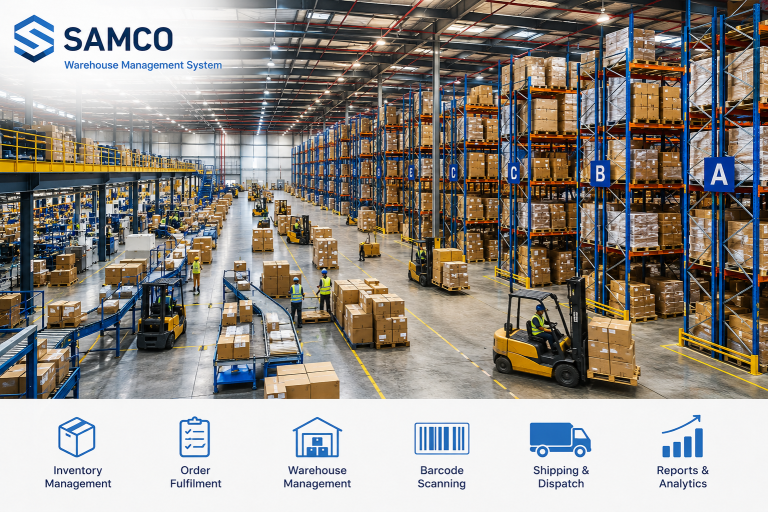
What Are Warehouse Management System Functions?
Warehouse management system functions are the operational processes that control how inventory moves through a warehouse. Instead of managing each task manually, a Warehouse Management System (WMS) coordinates receiving, storage, inventory tracking, picking, packing, shipping, and returns through one centralized platform. These functions work together to improve warehouse efficiency, maintain accurate inventory records, and ensure products are available when customers need them.
A common misconception is that a warehouse management system is simply inventory software. In reality, the software is the platform, while the functions are the individual operational activities it performs. Each function is designed to automate or simplify a specific warehouse process, helping businesses reduce manual work, minimize errors, and improve productivity.
For example, when a supplier delivers products, the warehouse team records the shipment during the receiving process. The system then recommends the most suitable storage location, updates inventory quantities in real time, and makes the products immediately visible for future orders. When a customer places an order, the system creates picking instructions, verifies packing, updates inventory after dispatch, and records shipment information. Every stage is connected, ensuring inventory data remains accurate throughout the entire warehouse workflow.
As warehouse operations become more complex, businesses need better visibility into inventory movement, warehouse capacity, and order fulfilment. A modern Warehouse Management System provides this visibility by connecting every warehouse activity within a single system. When integrated with Inventory Management Software Dubai, businesses can also synchronize warehouse operations with purchasing, sales, and inventory control, allowing every department to work with the same up-to-date information.
Understanding warehouse management system functions helps businesses evaluate software more effectively. Instead of comparing software based only on features, decision-makers can assess whether the system supports their daily warehouse processes, improves operational efficiency, and provides the flexibility to scale as business requirements grow.
Learn more about what a Oracle Warehouse Management System (WMS) is
Why Warehouse Management System Functions Matter
The efficiency of a warehouse depends on how well every operational process works together. Receiving goods quickly, storing products in the right locations, maintaining accurate inventory records, and fulfilling customer orders on time all require a structured workflow. Without clearly defined warehouse management system functions, businesses often experience inventory discrepancies, delayed shipments, and unnecessary operational costs.
Each warehouse management system function is designed to improve a specific part of the warehouse operation while contributing to the overall performance of the business. Rather than treating receiving, storage, inventory control, and shipping as separate tasks, a Warehouse Management System connects them into one continuous process. This ensures that inventory information remains accurate from the moment products enter the warehouse until they are delivered to customers.
One of the biggest advantages is real-time inventory visibility. As products move between receiving, storage, picking, and dispatch, inventory quantities are updated automatically. This allows warehouse teams to locate products faster, reduce manual stock checks, and make informed decisions based on current inventory levels. Businesses using a Warehouse Tracking System can monitor inventory movement more effectively and quickly identify stock shortages, misplaced items, or operational bottlenecks before they affect customer orders.
Well-designed warehouse management system functions also improve employee productivity. Instead of relying on paper records or manual spreadsheets, warehouse staff receive clear instructions for receiving shipments, storing inventory, replenishing stock, picking orders, and preparing deliveries. Standardized workflows reduce repetitive tasks, minimize errors, and help employees complete daily operations more efficiently.
As businesses expand, warehouse operations naturally become more complex. Additional warehouse locations, higher inventory volumes, and increasing customer expectations require better coordination across departments. Integrating warehouse operations with Warehouse and Inventory Management practices ensures inventory control, warehouse activities, and order fulfilment remain connected, supporting business growth without sacrificing operational efficiency.
Ultimately, warehouse management system functions are not just software capabilities—they are the operational foundation that enables businesses to improve inventory accuracy, streamline warehouse processes, reduce operating costs, and deliver a more reliable customer experience.
How Warehouse Operations Work: From Receiving to Dispatch
Every warehouse follows a sequence of activities to move products from suppliers to customers. While the workflow may vary depending on the industry or business size, the core process remains the same. A Warehouse Management System coordinates each stage, ensuring inventory moves efficiently, inventory records stay accurate, and warehouse teams can complete daily operations without unnecessary delays.
Understanding this workflow makes it easier to see how warehouse management system functions work together rather than as individual tasks.
1. Receiving Goods
The warehouse process begins when products arrive from suppliers. Warehouse staff verify purchase orders, inspect product quantities and conditions, and record the received inventory in the system. Once confirmed, the Warehouse Management System updates inventory records immediately, giving businesses real-time visibility of newly available stock.
2. Inspection and Verification
Before products are stored, they are checked for quality, damage, incorrect quantities, or missing items. Identifying issues at this stage prevents inaccurate inventory records and reduces problems during order fulfilment.
3. Put-away and Storage
After inspection, the system recommends the most appropriate storage location based on available warehouse space, product type, or inventory movement. Organizing inventory correctly makes products easier to locate and reduces unnecessary travel time for warehouse staff.
Businesses using a Warehouse Tracking System can accurately identify storage locations, monitor inventory movement, and retrieve products more efficiently during picking operations.
4. Inventory Tracking
As products move within the warehouse, every inventory transfer, adjustment, replenishment, or stock movement is recorded automatically. This provides warehouse managers with accurate inventory visibility while reducing the need for frequent manual stock counts.
When combined with Barcode Inventory Management, warehouse teams can scan products during receiving, transfers, and picking to improve inventory accuracy and reduce manual data entry.
5. Order Picking
When a customer places an order, the Warehouse Management System generates picking instructions based on product location and inventory availability. Warehouse employees can locate products quickly, reducing picking errors and improving order processing speed.
6. Packing and Verification
Picked products are packed according to customer requirements. Before shipment, warehouse staff verify product quantities, packaging, and shipping information to ensure every order is complete and ready for dispatch.
7. Shipping and Dispatch
After packing is complete, shipment details are confirmed, inventory quantities are updated automatically, and products are prepared for delivery. This ensures customers receive accurate orders while warehouse inventory remains synchronized with actual stock levels.
8. Returns Processing
Returned products are inspected before being restocked, repaired, or removed from inventory. Managing returns efficiently helps maintain accurate inventory records while reducing losses caused by damaged or unsellable products.
Every stage in this workflow depends on the previous one. If receiving information is inaccurate, inventory records become unreliable. If storage locations are incorrect, picking takes longer. If inventory is not updated during dispatch, future orders may experience stock shortages. By connecting every warehouse activity into one continuous workflow, a Warehouse Management System improves operational efficiency, reduces errors, and provides businesses with complete visibility across warehouse operations.
Core Warehouse Management System Functions
A Warehouse Management System supports every stage of warehouse operations through a set of connected functions. Instead of treating receiving, inventory control, order picking, and shipping as separate activities, the system manages them as one continuous workflow. This improves inventory accuracy, reduces manual work, and helps warehouse teams complete daily operations more efficiently.
The following are the core warehouse management system functions found in modern warehouse environments.
Receiving Management
Receiving is the first and one of the most important warehouse management functions. Every product entering the warehouse must be verified before it becomes available for storage or customer orders.
During the receiving process, warehouse teams compare delivered products with purchase orders, inspect quantities and product conditions, and record accepted inventory in the system. Once confirmed, inventory levels are updated immediately, giving warehouse managers accurate visibility of available stock.
A well-managed receiving process helps prevent inventory discrepancies, duplicate records, and incorrect stock levels from entering the warehouse.
Put-away Management
After products are received and inspected, they need to be stored in the correct warehouse location. Put-away management determines the most suitable storage area based on available space, product size, storage rules, or inventory movement.
Assigning products to organized storage locations improves warehouse efficiency because employees spend less time searching for inventory. Proper put-away planning also reduces congestion inside the warehouse and supports faster picking operations later in the workflow.
Inventory Control
Inventory control is one of the most valuable warehouse management system functions because it maintains accurate stock information throughout daily operations.
Every inventory movement—including receiving, transfers, picking, shipping, and returns—is recorded automatically. This provides warehouse managers with real-time inventory visibility while reducing manual stock adjustments and unnecessary cycle counts.
Businesses using Warehouse Tracking System solutions can monitor inventory movement across storage locations, helping prevent misplaced inventory and improving stock accuracy.
Warehouse Location Management
Large warehouses often contain hundreds or thousands of storage locations. Warehouse location management organizes inventory using racks, shelves, bins, and warehouse zones, making every product easier to locate.
Instead of relying on employee memory, the system records the exact storage location of each product. This reduces searching time, improves picking accuracy, and supports efficient warehouse organization even as inventory volumes increase.
Stock Replenishment
Inventory stored in reserve locations must be replenished as picking locations become empty. Stock replenishment ensures products remain available for order fulfilment without interrupting warehouse operations.
The Warehouse Management System monitors inventory levels and identifies when additional stock should be moved from reserve storage to picking locations. This helps prevent delays during busy periods while maintaining continuous warehouse productivity.
Picking Management
Order picking begins when customer orders are received. The Warehouse Management System generates optimized picking instructions based on product location, inventory availability, and warehouse layout.
Efficient picking routes reduce employee travel time while improving order accuracy. Businesses handling large order volumes may also use zone picking, batch picking, or wave picking to increase warehouse productivity.
Barcode scanning further improves this process by allowing warehouse employees to verify products before they are packed. Businesses implementing Barcode Inventory Management can reduce picking errors while maintaining accurate inventory records throughout fulfilment.
Packing Management
Packing management verifies that the correct products, quantities, and packaging materials are used before orders leave the warehouse.
During packing, warehouse teams confirm customer orders, prepare shipping labels, and ensure products are securely packaged for transportation. This final verification stage reduces shipping errors, minimizes returns, and helps maintain customer satisfaction.
Shipping and Dispatch
Shipping is the final outbound warehouse function. Once an order has been packed, the Warehouse Management System confirms shipment details, updates inventory quantities, and records dispatch information.
Accurate shipping processes ensure customers receive the correct products while warehouse inventory remains synchronized with completed deliveries. Real-time updates also improve shipment tracking and operational reporting.
Returns Management
Product returns are a normal part of warehouse operations. Returned inventory must be inspected before being restocked, repaired, recycled, or removed from inventory.
Managing returns through a Warehouse Management System ensures inventory records remain accurate while helping businesses recover usable stock more efficiently. Proper returns management also provides valuable insights into product quality and return trends.
Reporting and Analytics
Warehouse managers rely on accurate information to improve operational performance. Reporting and analytics functions provide real-time visibility into inventory levels, warehouse productivity, order fulfilment, stock movement, and employee performance.
Performance reports help identify operational bottlenecks, monitor warehouse KPIs, and support informed business decisions. When integrated with Inventory Management Software Dubai, warehouse reporting can also be connected with purchasing, sales, and overall inventory management, providing a complete operational view across the business.
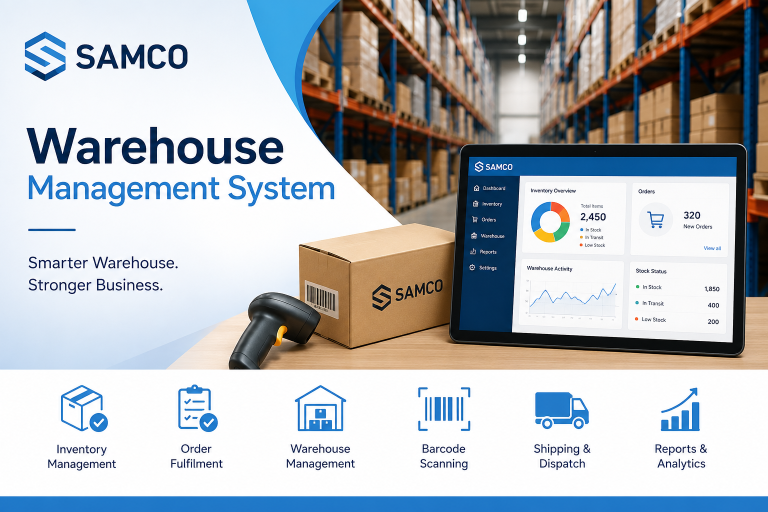
Advanced Warehouse Management System Functions
Modern warehouse operations require more than basic inventory tracking. As businesses grow, they often need additional capabilities to handle higher inventory volumes, multiple warehouse locations, faster order fulfilment, and real-time operational visibility. Advanced warehouse management system functions help businesses improve efficiency, reduce manual processes, and adapt to changing operational requirements without disrupting daily warehouse activities.
The following advanced functions enhance warehouse performance and support long-term business growth.
Barcode Integration
Barcode technology simplifies inventory identification throughout warehouse operations. Every product is assigned a unique barcode that can be scanned during receiving, storage, stock transfers, picking, packing, and shipping. Each scan automatically updates inventory records, reducing manual data entry and improving inventory accuracy.
Businesses implementing Barcode Inventory Management can complete inventory transactions more quickly while minimizing picking errors, duplicate entries, and stock discrepancies.
RFID Inventory Tracking
Unlike barcode scanning, RFID technology allows multiple tagged products to be identified simultaneously without requiring direct line-of-sight scanning. This makes RFID particularly useful for warehouses handling large inventory volumes or high-speed inventory movement.
An RFID Inventory Tracking System provides real-time inventory visibility, improves inventory accuracy, and reduces the time required for stock verification and warehouse audits.
Mobile Warehouse Management
Warehouse employees no longer need to rely on printed documents or fixed computer terminals. Mobile warehouse devices allow staff to receive work instructions, scan products, update inventory, and verify warehouse transactions directly from handheld devices.
This improves communication between warehouse teams while allowing inventory updates to be recorded immediately as products move through different warehouse processes.
Real-Time Inventory Visibility
Warehouse managers need accurate information to make operational decisions quickly. Modern warehouse management systems continuously update inventory records whenever products are received, moved, picked, packed, or dispatched.
Real-time inventory visibility helps businesses monitor stock availability, identify inventory shortages early, and improve planning across purchasing, sales, and warehouse operations.
Warehouse Automation
As warehouse operations become more complex, businesses often automate repetitive activities to improve efficiency. A Warehouse Automation Solutions platform can support automated inventory movement, barcode scanning workflows, warehouse task allocation, and operational monitoring.
Automation helps reduce manual workloads, improve consistency, and increase warehouse productivity while allowing employees to focus on higher-value operational tasks.
Multi-Warehouse Management
Businesses operating more than one warehouse require centralized inventory control across all locations. Multi-warehouse management enables organizations to monitor inventory availability, warehouse transfers, and stock movements from a single system.
This improves inventory planning, reduces stock imbalances between warehouse locations, and provides better visibility across the entire distribution network.
User Roles and Access Control
Different warehouse employees perform different responsibilities. Modern warehouse management systems allow administrators to assign user roles based on job responsibilities, ensuring employees only access the functions required for their daily work.
Controlled access improves data security, reduces unauthorized inventory changes, and helps maintain operational consistency.
Alerts and Notifications
Warehouse management systems can automatically notify users when important events occur, helping warehouse teams respond quickly before operational issues become larger problems.
Common alerts include:
Low inventory levels
Delayed order processing
Inventory discrepancies
Pending replenishment
Shipment delays
Overstock situations
These notifications support faster decision-making and help warehouse managers maintain smooth daily operations.
ERP and Business System Integration
Warehouse operations work most effectively when connected with purchasing, sales, finance, and inventory management. Integrating a Warehouse Management System with Inventory Management Software Dubai creates a unified business environment where inventory information is shared automatically between departments.
This eliminates duplicate data entry, improves reporting accuracy, and allows management teams to make decisions using consistent, real-time business information.
Why Advanced Functions Matter
Basic warehouse functions help manage inventory, but advanced capabilities enable businesses to improve efficiency, scale operations, and respond more effectively to changing customer demands. Features such as barcode scanning, RFID tracking, automation, mobile access, and multi-warehouse management allow warehouse operations to remain accurate, productive, and adaptable as business requirements continue to grow.
Choosing a Warehouse Management System with these advanced functions helps businesses prepare for future expansion while maintaining efficient and reliable warehouse operations.
How Warehouse Management System Functions Work Together
A Warehouse Management System delivers the greatest value when all its functions operate as one connected process. While each function has a specific role, warehouse efficiency depends on how smoothly information flows between receiving, inventory control, picking, packing, shipping, and reporting. When every stage is linked, businesses gain accurate inventory visibility, reduce manual work, and maintain consistent warehouse operations.
Consider a typical warehouse workflow.
A supplier delivers a shipment of products to the warehouse. During the receiving process, warehouse staff verify the purchase order, inspect product quantities, and record accepted inventory in the system. Once approved, the Warehouse Management System immediately updates inventory records and assigns storage locations based on warehouse rules and available space.
Next, the put-away function directs employees to place products in the correct racks, shelves, or bins. Because every storage location is recorded, warehouse staff can locate products quickly whenever customer orders are received. Businesses using a Warehouse Tracking System can monitor inventory movement between warehouse locations while maintaining accurate stock records throughout daily operations.
When a customer places an order, the inventory control function checks stock availability before generating picking instructions. The system identifies the fastest picking route, helping warehouse employees retrieve products efficiently while reducing unnecessary travel within the warehouse. During this process, Barcode Inventory Management allows employees to scan products at each stage, confirming the correct items have been picked and automatically updating inventory quantities.
After picking, the packing function verifies product quantities, prepares shipping labels, and confirms that orders are ready for dispatch. Once shipped, the system records delivery information, updates inventory levels, and generates operational reports that warehouse managers can use to monitor performance.
If products are returned, the returns management function inspects the returned items and determines whether they should be restocked, repaired, or removed from inventory. This ensures inventory records remain accurate while minimizing unnecessary stock losses.
Because every warehouse management system function shares the same information, businesses avoid duplicate data entry, reduce operational errors, and maintain complete visibility across warehouse activities. Rather than managing individual warehouse tasks separately, the system creates one continuous workflow that supports inventory accuracy, faster order fulfilment, and better operational decision-making.
Benefits of Warehouse Management System Functions
Warehouse management system functions do more than organize daily warehouse activities—they help businesses improve efficiency, maintain accurate inventory records, and support long-term operational growth. When every warehouse process is connected through a single system, businesses can reduce delays, minimize errors, and make better decisions based on real-time information.
The following benefits explain why modern businesses invest in Warehouse Management Systems.
Improved Inventory Accuracy
Accurate inventory records are essential for efficient warehouse operations. Warehouse management system functions automatically update inventory quantities whenever products are received, transferred, picked, shipped, or returned. This reduces manual data entry and helps prevent discrepancies between physical inventory and system records.
By integrating a Warehouse Tracking System, businesses gain real-time visibility into inventory movement, making it easier to locate products, perform stock verification, and maintain reliable inventory information.
Faster Order Fulfilment
Customer satisfaction often depends on how quickly and accurately orders are processed. Warehouse management system functions streamline order fulfilment by guiding warehouse staff through picking, packing, and shipping with clear instructions and optimized workflows.
When products can be located quickly and inventory availability is always up to date, businesses can reduce order processing times, minimize shipping delays, and improve delivery performance.
Higher Warehouse Productivity
Manual warehouse operations often involve repetitive paperwork, duplicate data entry, and time spent searching for products. Warehouse management system functions automate routine processes, allowing employees to focus on productive warehouse activities instead of administrative tasks.
Organized workflows, optimized picking routes, and automated inventory updates help warehouse teams complete more work in less time while maintaining consistent operational quality.
Better Inventory Visibility
Warehouse managers need accurate information to make informed decisions. Modern warehouse management systems provide real-time visibility into inventory levels, warehouse locations, stock movements, and order status from a centralized dashboard.
When integrated with Inventory Management Software Dubai, warehouse information can also be shared across purchasing, sales, and inventory control, helping every department work with the same accurate business data.
Lower Operating Costs
Inefficient warehouse processes often lead to unnecessary labour costs, excess inventory, delayed shipments, and inventory losses. Warehouse management system functions reduce these costs by improving inventory accuracy, minimizing manual work, and optimizing warehouse resources.
Better warehouse organization also reduces unnecessary product movement, allowing employees to complete daily tasks more efficiently.
Improved Decision-Making
Warehouse operations generate valuable business information every day. Reporting and analytics functions provide insights into inventory turnover, warehouse productivity, order fulfilment performance, and operational trends.
These insights help managers identify bottlenecks, improve warehouse planning, and make informed decisions that support continuous operational improvement.
Scalable Warehouse Operations
As businesses grow, warehouse operations become more complex. Additional inventory, expanding product ranges, new warehouse locations, and higher order volumes require systems that can adapt without disrupting daily operations.
A Warehouse Management System provides the flexibility to support business growth while maintaining consistent inventory control, standardized warehouse processes, and efficient order fulfilment across expanding operations.
Stronger Customer Satisfaction
Customers expect accurate orders and reliable delivery times. Warehouse management system functions help businesses meet these expectations by improving picking accuracy, reducing shipping errors, and ensuring inventory availability.
Consistent warehouse operations contribute to faster deliveries, fewer returns caused by fulfilment mistakes, and a more dependable customer experience.
Industries That Benefit from Warehouse Management System Functions
Warehouse management system functions are valuable for any business that stores, manages, or distributes inventory. Although warehouse operations differ across industries, the objective remains the same: maintain accurate inventory, improve operational efficiency, and deliver products on time. A Warehouse Management System provides the flexibility to support these requirements while adapting to different business models and warehouse environments.
Below are some of the industries that benefit most from warehouse management system functions.
Manufacturing
Manufacturing companies manage raw materials, work-in-progress inventory, spare parts, and finished goods throughout the production process. Maintaining accurate inventory is essential to avoid production delays and material shortages.
Warehouse management system functions help manufacturers monitor inventory movement, organize storage locations, replenish production materials, and improve warehouse visibility. Businesses using Manufacturing Inventory Management Software can better coordinate warehouse operations with production planning, ensuring materials are available when needed.
Retail
Retail businesses often manage thousands of products while handling seasonal demand, promotional campaigns, and customer returns. Accurate inventory records are essential for maintaining product availability and delivering a consistent shopping experience.
Warehouse management system functions improve inventory control, accelerate order processing, and help retailers maintain organized warehouse operations. Real-time inventory updates also reduce the risk of overselling products that are no longer available.
Wholesale and Distribution
Wholesale distributors process large quantities of inventory every day. Products move continuously between suppliers, warehouses, and customers, making efficient warehouse operations essential.
Warehouse management system functions simplify receiving, storage, picking, packing, and shipping while improving inventory accuracy. Businesses using a Warehouse Tracking System can monitor inventory movement across warehouse locations and respond more quickly to customer orders.
Logistics and Third-Party Warehousing
Logistics providers and third-party warehouses manage inventory on behalf of multiple customers. This requires accurate inventory tracking, organized warehouse locations, and complete visibility across inbound and outbound shipments.
Warehouse management system functions provide centralized control over inventory movement, warehouse capacity, and customer orders, helping logistics businesses maintain service quality while handling increasing shipment volumes.
E-commerce
Online businesses depend on fast and accurate order fulfilment to meet customer expectations. Every delay or picking error can affect customer satisfaction and increase product returns.
Warehouse management system functions automate inventory updates, optimize picking routes, and improve shipping accuracy. Integration with Inventory Management Software Dubai also helps synchronize warehouse operations with online sales, purchasing, and inventory management.
Healthcare and Pharmaceuticals
Healthcare organizations and pharmaceutical distributors manage medical products, equipment, and medicines that require accurate inventory control and traceability.
Warehouse management system functions help maintain organized inventory, monitor stock levels, and improve product tracking throughout the warehouse. This reduces the risk of inventory shortages while supporting accurate warehouse records.
Food and Beverage
Food and beverage warehouses manage products with expiration dates, batch numbers, and strict storage requirements. Inventory must move efficiently to reduce waste and maintain product quality.
Warehouse management system functions help businesses rotate inventory, monitor stock movement, and improve warehouse organization, supporting faster distribution and better inventory control.
Automotive and Spare Parts
Automotive businesses manage thousands of spare parts with different sizes, specifications, and storage requirements. Quickly locating the correct part is essential for efficient order fulfilment and customer service.
Warehouse management system functions organize warehouse locations, improve inventory visibility, and simplify order picking, helping businesses process customer orders more efficiently while reducing inventory errors.
Why Every Industry Benefits
Although warehouse operations differ across industries, the core warehouse management system functions remain the same. Receiving, inventory control, warehouse organization, picking, packing, shipping, reporting, and returns all work together to improve operational efficiency.
By implementing these functions, businesses can improve inventory accuracy, reduce operational costs, increase warehouse productivity, and create a scalable warehouse environment capable of supporting future business growth.
Common Warehouse Challenges Without a Warehouse Management System
Managing a warehouse without a Warehouse Management System becomes increasingly difficult as inventory volumes, product ranges, and customer orders grow. Manual processes may work for small operations, but they often struggle to keep pace with modern business requirements. As a result, businesses face inventory inaccuracies, operational delays, and higher costs that affect both productivity and customer satisfaction.
The following are some of the most common warehouse challenges that businesses experience without a structured Warehouse Management System.
Inventory Inaccuracies
Manual inventory updates increase the risk of incorrect stock records. Products may be received but not recorded, moved without documentation, or shipped without updating inventory quantities. These inconsistencies make it difficult to know the actual inventory available.
A Warehouse Tracking System helps maintain accurate inventory records by recording every inventory movement in real time, reducing discrepancies between physical stock and system data.
Slow Order Processing
Finding products manually can take valuable time, especially in large warehouses with thousands of inventory items. Employees may spend unnecessary time searching shelves, verifying inventory, or correcting picking mistakes.
Without organized warehouse workflows, customer orders take longer to process, increasing delivery times and reducing overall warehouse productivity.
Poor Inventory Visibility
Warehouse managers need accurate information to make informed decisions. Without centralized inventory tracking, businesses often rely on spreadsheets, paper records, or disconnected systems that provide incomplete or outdated information.
Limited inventory visibility makes it difficult to identify stock shortages, monitor inventory movement, or plan future purchasing requirements.
Overstocking and Stock Shortages
Inaccurate inventory records often lead to poor purchasing decisions. Businesses may order products that are already available while failing to replenish items that are running low.
These situations create unnecessary storage costs, tie up working capital, and increase the risk of missed sales opportunities when popular products become unavailable.
Inefficient Warehouse Space Utilization
Without organized location management, products may be stored wherever space is available rather than in designated warehouse locations. This makes inventory difficult to locate and increases employee travel time during picking and replenishment.
Proper warehouse organization improves space utilization while helping warehouse teams complete daily tasks more efficiently.
Higher Labour Costs
Manual inventory counting, paper-based documentation, repeated stock verification, and inefficient warehouse processes require additional labour. Employees spend more time performing administrative tasks instead of productive warehouse activities.
Warehouse management system functions automate routine processes, allowing businesses to improve productivity without increasing operational complexity.
Increased Picking and Shipping Errors
When warehouse teams rely on manual product identification, the likelihood of selecting incorrect items increases. Picking mistakes often lead to incorrect deliveries, product returns, and additional shipping costs.
Businesses implementing Barcode Inventory Management can verify products during picking and packing, significantly improving order accuracy before products leave the warehouse.
Limited Business Growth
As businesses expand, warehouse operations become more demanding. Managing additional inventory, multiple warehouse locations, and increasing customer orders using manual processes becomes difficult and time-consuming.
A scalable Warehouse Management System helps businesses handle operational growth while maintaining inventory accuracy, warehouse efficiency, and consistent customer service.
Why Solving These Challenges Matters
Warehouse challenges rarely occur in isolation. Inventory inaccuracies can lead to stock shortages, delayed order processing, dissatisfied customers, and higher operating costs. Addressing these problems requires more than improving individual tasks—it requires connecting every warehouse process through one integrated system.
By implementing warehouse management system functions, businesses can improve inventory visibility, streamline warehouse operations, reduce manual work, and build a warehouse environment that supports long-term growth.
How to Choose the Right Warehouse Management System
Selecting a Warehouse Management System is an important business decision that affects inventory control, warehouse productivity, and future operational growth. While many solutions offer similar features, the right system should match your warehouse processes, integrate with existing business operations, and support future expansion. Evaluating software based only on price or feature lists may result in a solution that does not fully address your operational needs.
Before making a decision, consider the following factors.
Understand Your Warehouse Requirements
Every warehouse operates differently. Some businesses manage a single warehouse with a limited product range, while others handle multiple warehouses, thousands of inventory items, or high daily order volumes.
Start by identifying your operational requirements, including:
Number of warehouse locations
Inventory volume
Daily order processing
Storage methods
Receiving and shipping workflows
Future business growth
A clear understanding of these requirements makes it easier to select a system that supports both current operations and long-term expansion.
Evaluate Core Warehouse Functions
The software should support every stage of warehouse operations without requiring unnecessary manual work.
Look for functions such as:
Receiving management
Put-away management
Inventory control
Warehouse location management
Stock replenishment
Picking and packing
Shipping and dispatch
Returns management
Reporting and analytics
A complete Warehouse Management System should connect these functions into one integrated workflow rather than managing them independently.
Look for Real-Time Inventory Visibility
Accurate inventory information is essential for efficient warehouse operations. A modern Warehouse Management System should update inventory automatically whenever products are received, transferred, picked, shipped, or returned.
Businesses using a Warehouse Tracking System can monitor inventory movement across warehouse locations, helping warehouse managers make faster and more informed operational decisions.
Consider Integration with Other Business Systems
Warehouse operations should not function independently from purchasing, sales, finance, and inventory management. Selecting software that integrates with existing business applications improves data consistency while reducing duplicate data entry.
Integrating warehouse operations with Inventory Management Software Dubai allows businesses to manage inventory, warehouse activities, purchasing, and reporting through a connected platform.
Choose a Scalable Solution
Warehouse requirements often change as businesses grow. Additional warehouse locations, increasing inventory volumes, and higher customer demand require software that can expand without disrupting daily operations.
Choosing a scalable solution helps avoid future software replacement costs while supporting long-term operational growth.
Evaluate Automation Capabilities
Warehouse automation is becoming increasingly important for businesses handling larger inventory volumes and higher order quantities.
A system that supports Warehouse Automation Solutions can improve inventory movement, automate repetitive warehouse tasks, and increase operational efficiency while reducing manual workloads.
Even if full automation is not required today, selecting software that supports future automation provides greater flexibility as warehouse operations evolve.
Review Reporting and Analytics
Operational reports provide valuable insights into warehouse performance. Before selecting a Warehouse Management System, confirm that it provides reporting for:
Inventory levels
Order fulfilment
Warehouse productivity
Stock movement
Inventory accuracy
Warehouse performance indicators
These reports help managers identify improvement opportunities and make informed business decisions.
Assess Implementation and Support
Successful implementation depends on more than software functionality. Businesses should evaluate the vendor’s ability to provide:
Business requirement analysis
System configuration
Data migration
Employee training
Technical support
Future software updates
A structured implementation process reduces operational disruption while helping warehouse teams adopt the new system more efficiently.
Think Beyond Today’s Requirements
The best Warehouse Management System is not simply the one that meets current business needs—it is the one that continues supporting warehouse operations as the business grows. A solution with strong inventory control, integration capabilities, reporting, automation readiness, and ongoing support provides greater long-term value than software chosen solely because of its initial cost.
Taking the time to evaluate these factors helps businesses select a Warehouse Management System that improves warehouse efficiency, strengthens inventory management, and supports sustainable business growth.
Why Businesses Choose SAMCO for Warehouse Management Systems
Choosing the right Warehouse Management System involves more than selecting software with the right features. Successful implementation depends on understanding warehouse operations, configuring the system to match business processes, and providing the support needed for long-term success. At SAMCO, we help businesses build efficient warehouse operations by combining technology with practical implementation expertise.
We begin by understanding how your warehouse operates. Our team evaluates receiving processes, storage methods, inventory movement, picking workflows, packing procedures, shipping activities, and reporting requirements. This allows us to recommend a Warehouse Management Systemthat aligns with your operational goals rather than offering a one-size-fits-all solution.
Every business has unique warehouse requirements. Whether you manage a single warehouse or multiple distribution centers, SAMCO provides solutions that can be configured to match your inventory structure, warehouse layout, operational workflows, and business growth plans. We also ensure the system integrates with existing purchasing, sales, finance, and inventory processes through Inventory Management Software Dubai, creating a connected business environment with accurate, real-time information.
Implementation is supported through system configuration, data migration, user training, and testing to help warehouse teams transition smoothly. After deployment, we continue providing technical support and system guidance, helping businesses optimize warehouse performance as operational needs evolve.
As warehouse operations expand, many organizations introduce barcode scanning, warehouse tracking, and automation to improve productivity. Our solutions are designed to support these future enhancements, giving businesses the flexibility to improve efficiency without replacing their existing warehouse management platform.
Whether your goal is to improve inventory accuracy, streamline order fulfilment, or gain better visibility into warehouse operations, SAMCO provides the technology and implementation support to help you build a reliable, scalable, and efficient warehouse management process.
Ready to improve your warehouse operations?
Explore SAMCO’s Warehouse Management System to simplify inventory control, streamline warehouse workflows, and improve order fulfilment with a solution tailored to your business requirements. Whether you’re upgrading an existing warehouse or implementing a new system, our team can help you choose the right solution for your operational goals.


