


How to Choose the Best Inventory Management Software Dubai (2026 Guide)
Managing inventory has become more challenging as businesses grow, especially when products move across multiple warehouses, retail outlets, or distribution centers. Relying on spreadsheets or manual stock records often leads to inventory discrepancies, delayed order fulfillment, overstocking, and unnecessary operational costs. For businesses in Dubai, where speed and accuracy directly impact customer satisfaction, investing in the right Inventory Management Software Dubai solution is no longer optional—it’s a strategic business decision.
A modern inventory management system provides complete visibility into stock movements, automates routine processes, and helps businesses make informed purchasing and replenishment decisions. Whether you operate a retail store, manufacturing facility, wholesale distribution business, or warehouse, choosing software that matches your operational requirements is essential for long-term growth.
However, not every inventory solution offers the same capabilities. Some businesses require advanced warehouse management, while others need barcode scanning, RFID tracking, multi-location inventory control, or ERP integration. Understanding these differences before making a decision can save both time and implementation costs.
In this guide, you’ll learn how to evaluate different inventory solutions, identify the features that matter most, compare technologies such as barcode and RFID, and choose software that supports your business objectives in Dubai.
If you’re also exploring complete warehouse operations, our Warehouse Management System solution explains how inventory control integrates with receiving, picking, packing, and dispatch. Businesses planning to automate stock identification should also review our Barcode Inventory Management and RFID Inventory Tracking System solutions to understand which technology best suits their operations.
What is Inventory Management Software?
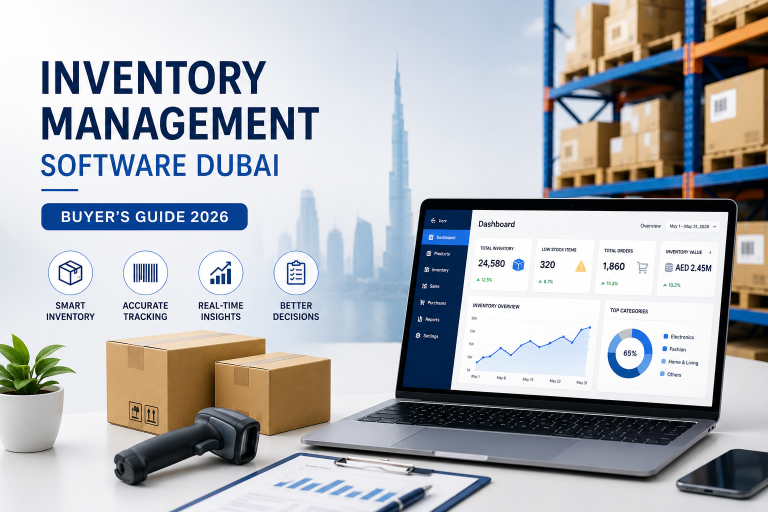
Inventory Management Software is a business solution that helps organizations monitor, control, and optimize the movement of inventory from purchasing to storage and final delivery. Instead of relying on spreadsheets or manual stock records, businesses can track inventory in real time, maintain accurate stock levels, and gain complete visibility across warehouses, retail stores, or distribution centers.
A modern Inventory Management Software Dubai solution centralizes inventory information in one platform, allowing businesses to monitor stock availability, record incoming and outgoing products, manage purchase orders, and generate accurate inventory reports. This improves operational efficiency while reducing errors caused by manual processes.
As businesses grow, inventory becomes more complex. Multiple warehouse locations, increasing product variations, and higher customer demand require faster and more accurate inventory control. An advanced inventory management system simplifies these operations by automating stock updates, sending low-stock alerts, supporting batch and serial number tracking, and improving inventory forecasting.
Many businesses also integrate inventory software with a Warehouse Management System to streamline warehouse activities such as receiving goods, put-away, picking, packing, and dispatch. This integration provides better coordination between inventory records and physical warehouse operations.
For organizations seeking higher inventory accuracy, technologies such as Barcode Inventory Management and RFID Inventory Tracking System further automate stock identification and movement. Barcode scanning enables quick product identification during receiving and dispatch, while RFID technology allows businesses to monitor inventory movement automatically without requiring direct line-of-sight scanning.
Whether you operate a retail business, manufacturing company, wholesale distribution center, or logistics warehouse, implementing the right inventory management software creates greater inventory accuracy, improves customer service, and supports long-term business growth.
Why Businesses Need Inventory Management Software Dubai
Dubai’s fast-paced business environment demands accuracy, speed, and complete visibility across inventory operations. Whether you’re managing a retail store, manufacturing facility, wholesale distribution business, or multiple warehouses, even small inventory errors can lead to delayed deliveries, increased operational costs, and dissatisfied customers. As businesses expand, manual inventory tracking simply cannot keep pace with growing stock volumes and increasingly complex supply chains.
One of the biggest challenges businesses face is maintaining accurate stock levels across different locations. Without a centralized inventory system, it’s common to experience stock shortages, overstocking, duplicate purchases, or inaccurate inventory records. These issues not only reduce profitability but also affect purchasing decisions and customer confidence.
A modern Inventory Management Software Dubai solution provides real-time visibility into inventory movement, helping businesses know exactly what products are available, where they are stored, and when they need replenishment. Automated stock updates reduce human errors, improve inventory accuracy, and ensure that sales, purchasing, and warehouse teams work with the same information.
For businesses operating warehouses, integrating inventory software with a Warehouse Tracking System makes it easier to monitor inventory movement from receiving to dispatch. Warehouse staff can quickly locate products, reduce picking errors, and improve overall warehouse efficiency. Companies managing larger facilities often combine this with a Warehouse Management System to optimize storage, picking routes, and order fulfillment.
As businesses continue adopting automation, technologies such as Barcode Inventory Management and RFID Inventory Tracking System further improve operational efficiency by reducing manual data entry and providing faster, more accurate inventory identification. These technologies enable businesses to process inventory more efficiently while supporting future growth.
Ultimately, the right inventory management solution helps businesses improve customer satisfaction, reduce operational costs, make better purchasing decisions, and build a scalable foundation for long-term success.
10 Signs Your Business Needs Inventory Management Software
Many businesses continue using spreadsheets or manual inventory records until operational problems become impossible to ignore. While these methods may work for a small inventory, they often become inefficient as product ranges, sales volume, and warehouse operations grow. If your business experiences any of the following challenges, it may be time to invest in a reliable Inventory Management Software Dubai solution.
1. Frequent Stock Shortages
Customers place orders, but products are unavailable because inventory records are inaccurate. This leads to lost sales and reduced customer trust.
2. Overstocking Slow-Moving Products
Without accurate inventory reports, businesses often purchase more stock than necessary, increasing storage costs and tying up working capital.
3. Inventory Records Don’t Match Physical Stock
If your warehouse team regularly finds differences between system records and actual inventory, manual processes are likely causing costly errors.
4. Multiple Warehouses Are Difficult to Manage
Managing inventory across different locations becomes challenging without centralized visibility. A Warehouse Tracking System helps monitor inventory movement between warehouses while improving stock accuracy.
5. Warehouse Staff Spend Too Much Time Searching for Products
Poor inventory organization delays order fulfillment and reduces productivity. Integrating inventory software with a Warehouse Management System allows businesses to organize storage locations, improve picking efficiency, and reduce fulfillment time.
6. Manual Data Entry Causes Frequent Mistakes
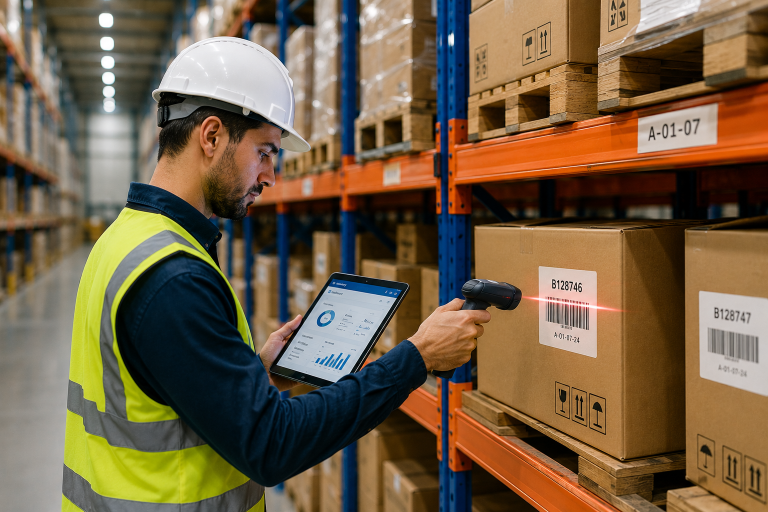
Typing product information manually increases the risk of incorrect stock quantities, duplicate records, and delayed updates. Businesses can significantly improve accuracy with Barcode Inventory Management, allowing inventory transactions to be completed quickly through barcode scanning.
7. You Have No Real-Time Inventory Visibility
Business owners should always know current stock levels without waiting for manual reports. Real-time inventory data supports faster purchasing and operational decisions.
8. Inventory Audits Take Too Long
Physical stock counts become faster and more accurate when inventory is digitally tracked instead of manually verified.
9. Customer Orders Are Frequently Delayed
Poor inventory visibility often results in shipping delays and backorders, directly affecting customer satisfaction and repeat business.
10. Your Business Is Growing Faster Than Your Current System
As operations expand, inventory processes must scale as well. Businesses planning future growth often adopt an RFID Inventory Tracking System to automate inventory identification, reduce manual work, and improve operational efficiency across larger warehouses.
Recognizing these warning signs early allows businesses to improve inventory accuracy, reduce unnecessary costs, and build a more efficient supply chain before operational challenges begin affecting profitability.
Essential Features to Look for in Inventory Management Software
Choosing inventory management software should go beyond comparing prices. The right solution should improve operational efficiency, support business growth, and adapt to your future requirements. Before selecting any software, evaluate whether it includes the essential features needed to manage inventory accurately and streamline warehouse operations.
| Feature | Why It Matters |
|---|---|
| Real-Time Inventory Tracking | Provides live stock updates across all locations, helping businesses prevent stock shortages and overstocking. |
| Multi-Warehouse Management | Enables centralized inventory control for businesses operating multiple warehouses or branches. |
| Barcode Scanning | Simplifies receiving, stock transfers, and dispatch while reducing manual data entry errors. Businesses can achieve greater accuracy with Barcode Inventory Management. |
| RFID Integration | Supports automatic inventory identification and faster warehouse operations using RFID Inventory Tracking System technology. |
| Warehouse Management Integration | Improves receiving, storage, picking, packing, and shipping by integrating with a Warehouse Management System. |
| Purchase & Supplier Management | Tracks purchase orders, supplier performance, and replenishment to maintain optimal stock levels. |
| Sales & ERP Integration | Synchronizes inventory with sales, accounting, and ERP systems to eliminate duplicate data entry. |
| Reporting & Analytics | Provides insights into stock movement, inventory valuation, slow-moving products, and purchasing trends. |
| User Roles & Security | Restricts system access based on employee responsibilities and protects sensitive business information. |
| Cloud & Mobile Access | Allows managers and warehouse teams to monitor inventory anytime and from any location. |
While these features are important, not every business requires the same level of functionality. A retail store may prioritize barcode scanning and sales integration, whereas a manufacturing company might require batch tracking, production inventory control, and multi-warehouse management. Businesses handling high inventory volumes should also consider solutions that integrate with a Warehouse Tracking System to improve inventory visibility and warehouse efficiency.
Instead of choosing software with the longest feature list, focus on a solution that matches your operational requirements today while remaining flexible enough to support future expansion.
Barcode vs RFID Inventory Tracking: Which Technology Is Right for Your Business?
Choosing the right inventory tracking technology is just as important as selecting the right inventory management software. Two of the most widely used solutions are barcode and RFID (Radio Frequency Identification). Both improve inventory accuracy and reduce manual processes, but they serve different operational needs.
Barcode technology follows internationally recognized identification standards, allowing businesses to accurately identify, track, and manage products throughout the supply chain. Organizations implementing barcode-based inventory systems should follow GS1 barcode standards to ensure compatibility across suppliers, warehouses, retailers, and logistics partners.
Barcode Inventory Management uses printed labels that are scanned individually using a barcode scanner or mobile device. Every item requires a direct line of sight to be scanned, making barcode systems simple, reliable, and cost-effective. They are widely used by retailers, wholesalers, healthcare providers, and small to medium-sized warehouses because they are easy to implement and require minimal investment.
An RFID Inventory Tracking System, on the other hand, uses radio-frequency tags that can be read automatically without direct line-of-sight scanning. Multiple items can be identified simultaneously, making RFID an ideal solution for businesses managing large warehouses, high-value assets, or high-volume inventory movements. Although RFID requires a higher initial investment, it significantly improves inventory visibility, warehouse productivity, and stock accuracy.
Barcode vs RFID Comparison
| Feature | Barcode | RFID |
|---|---|---|
| Initial Cost | Lower | Higher |
| Scanning Method | Individual scanning | Automatic scanning |
| Line of Sight Required | Yes | No |
| Multiple Items at Once | No | Yes |
| Inventory Accuracy | High | Very High |
| Best For | Retail, Wholesale, Small Warehouses | Manufacturing, Distribution, Large Warehouses |
The right choice depends on your business requirements rather than the technology itself. If your primary goal is to digitize inventory while keeping implementation costs low, barcode technology is often the most practical starting point. However, businesses planning warehouse expansion, automation, or real-time inventory monitoring may benefit more from RFID technology.
Many growing organizations begin with Barcode Inventory Management and later integrate an RFID Inventory Tracking System as inventory volumes increase. Both technologies work seamlessly with modern inventory management software, allowing businesses to improve stock control while preparing for future operational growth.
Inventory Management Software vs Warehouse Management System: What’s the Difference?
Although the terms Inventory Management Software and Warehouse Management System (WMS) are often used interchangeably, they serve different purposes. Understanding the difference helps businesses invest in the right solution based on their operational requirements.
An Inventory Management Software Dubai solution focuses on controlling inventory throughout its lifecycle. It helps businesses monitor stock levels, manage purchase orders, track sales, prevent stock shortages, and maintain accurate inventory records across one or multiple locations. Its primary objective is to ensure that the right products are available at the right time while reducing excess inventory and improving stock accuracy.
A Warehouse Management System, on the other hand, is designed to optimize warehouse operations. It manages how products move inside the warehouse—from receiving and put-away to picking, packing, shipping, and returns. Instead of simply showing available inventory, a WMS improves warehouse productivity by organizing storage locations, optimizing picking routes, and reducing fulfillment time.
Inventory Management Software vs Warehouse Management System
| Inventory Management Software | Warehouse Management System |
|---|---|
| Tracks inventory levels | Manages warehouse operations |
| Controls purchasing and stock | Controls receiving, picking, packing, and dispatch |
| Prevents stock shortages | Improves warehouse productivity |
| Provides inventory reports | Optimizes warehouse workflows |
| Suitable for businesses of all sizes | Ideal for businesses with larger warehouse operations |
Many growing businesses use both systems together. Inventory software maintains accurate stock records, while the warehouse management system ensures products move efficiently within the warehouse. This combination improves inventory visibility, reduces operational errors, and accelerates order fulfillment.
Businesses operating larger facilities can further improve efficiency by implementing a Warehouse Tracking System, which provides real-time visibility into inventory movement and storage locations. When combined with technologies such as Barcode Inventory Management or an RFID Inventory Tracking System, businesses gain faster inventory identification, greater stock accuracy, and improved warehouse performance.
Choosing between inventory software and a warehouse management system is not always an either-or decision. For many businesses in retail, manufacturing, wholesale distribution, and logistics, integrating both solutions creates a more connected, scalable, and efficient inventory operation.
How to Choose the Right Inventory Management Software in Dubai
Selecting the right inventory management software is about finding a solution that supports your current operations while preparing your business for future growth. Every organization has unique inventory challenges, so the best software should align with your industry, warehouse processes, and long-term business objectives rather than offering unnecessary features.
1. Understand Your Business Requirements
Start by identifying how your inventory is managed today. Consider the number of products you stock, warehouse locations, daily transactions, and whether you operate retail stores, manufacturing facilities, or distribution centers. Choosing software that fits your existing workflow reduces implementation challenges and ensures faster user adoption.
2. Look for Real-Time Inventory Visibility
Accurate inventory decisions depend on real-time information. Your software should instantly update stock levels after every purchase, sale, transfer, or return. This reduces stock shortages, prevents overstocking, and gives every department access to reliable inventory data.
3. Ensure the Software Can Scale
Your inventory requirements will grow as your business expands. Choose software that supports multiple warehouses, additional users, increasing product volumes, and future business locations without requiring a complete system replacement.
4. Evaluate Warehouse Management Capabilities
If your business stores products in one or more warehouses, inventory software should integrate with a Warehouse Management System to improve receiving, storage, picking, packing, and dispatch operations. Businesses handling large inventories can further improve visibility with a Warehouse Tracking System, allowing warehouse teams to locate products quickly and reduce fulfillment delays.
5. Consider Barcode and RFID Support
Automation significantly improves inventory accuracy and operational efficiency. Businesses looking for affordable inventory automation should ensure the software supports Barcode Inventory Management for faster receiving, stock transfers, and dispatch. Organizations managing high-volume warehouses or valuable assets should also evaluate compatibility with an RFID Inventory Tracking System for real-time inventory identification and automated tracking.
6. Check Integration Capabilities
Inventory software should integrate seamlessly with ERP, accounting, purchasing, sales, and e-commerce platforms. Connected systems eliminate duplicate data entry, improve reporting accuracy, and create a single source of truth across the organization.
7. Evaluate Local Support and Implementation Experience
Technology alone does not guarantee success. Choose a software provider that understands local business operations, offers implementation support, user training, and ongoing technical assistance. A knowledgeable implementation partner helps businesses maximize software adoption while minimizing operational disruptions.
By evaluating these factors before making a decision, businesses can invest confidently in an inventory management solution that improves efficiency today and supports sustainable growth in the future.
Industries That Benefit Most from Inventory Management Software
Inventory management is not limited to warehouses or retail stores. Almost every business that purchases, stores, manufactures, or distributes products depends on accurate inventory control to maintain profitability and deliver better customer service. The right Inventory Management Software Dubai solution can be customized to support the operational needs of different industries while improving inventory visibility and reducing manual work.
Retail
Retail businesses handle thousands of products across multiple shelves, branches, and online sales channels. Without accurate inventory records, stock shortages and overstocking can quickly affect sales and customer satisfaction.
Inventory management software enables retailers to monitor stock levels in real time, automate replenishment, and synchronize inventory across physical stores and e-commerce platforms. Barcode scanning also speeds up receiving, stock transfers, and point-of-sale operations.
Manufacturing
Manufacturing companies manage raw materials, work-in-progress inventory, and finished goods simultaneously. Delays in material availability can interrupt production schedules and increase operational costs.
A specialized Manufacturing Inventory Management Software solution helps manufacturers maintain optimal inventory levels, monitor material consumption, improve production planning, and reduce unnecessary inventory carrying costs.
Factory Operations
Factories require continuous inventory monitoring to ensure production lines operate without interruption. Managing spare parts, components, packaging materials, and finished products becomes increasingly difficult as production volume grows.
Businesses operating factories can improve inventory accuracy with Factory Inventory Management Software, enabling better stock visibility, automated replenishment, and improved production efficiency.
Wholesale & Distribution
Wholesale businesses process high-volume inventory movements every day. Inventory software helps distributors monitor incoming shipments, warehouse transfers, order fulfillment, and customer deliveries while maintaining accurate stock records across multiple locations.
Combining inventory software with a Warehouse Tracking System improves inventory visibility and helps warehouse teams locate products quickly during order processing.
gistics & Warehousing
Logistics providers require real-time inventory information to improve warehouse operations, reduce fulfillment delays, and optimize storage utilization.
Integrating inventory software with a Warehouse Management System supports receiving, put-away, picking, packing, dispatch, and returns while improving overall warehouse productivity.
thcare & Pharmaceuticals
Hospitals, clinics, and pharmaceutical companies manage medical supplies, medicines, and consumables that often have expiry dates and strict regulatory requirements.
Inventory software helps healthcare organizations monitor stock availability, track batches, reduce waste, and ensure critical products remain available when needed.
Food & Beverage
Businesses handling food products must carefully monitor inventory turnover, expiry dates, and storage conditions.
Inventory management software improves stock rotation, reduces spoilage, supports demand forecasting, and helps maintain product availability during seasonal demand fluctuations.
Why Industry-Specific Inventory Management Matters
Although every industry manages inventory differently, the objective remains the same—maintaining accurate stock records while improving operational efficiency. Choosing software that supports your industry’s workflows, reporting requirements, and warehouse processes ensures better long-term performance and easier business expansion.
Common Mistakes Businesses Make When Choosing Inventory Management Software
Choosing the wrong inventory management software can lead to unnecessary costs, operational disruptions, and expensive system replacements. Many businesses focus only on price or a long feature list without considering whether the solution truly fits their day-to-day operations. Understanding these common mistakes helps businesses make a more informed investment.
Choosing Software Based Only on Price
Lower-cost software may appear attractive initially, but it often lacks essential features such as multi-warehouse management, reporting, barcode support, or system integration. Instead of evaluating price alone, consider the long-term value the software brings through improved efficiency, reduced inventory errors, and better business visibility.
Ignoring Future Business Growth
A solution that works today may become a limitation as your business expands. If you plan to open additional branches, increase warehouse capacity, or manage larger inventory volumes, choose software that can scale without requiring a complete migration in the future.
Overlooking Warehouse Operations
Many businesses purchase inventory software without considering how products move inside the warehouse. If warehouse activities such as receiving, picking, packing, and dispatch are not properly managed, inventory accuracy alone will not improve operational efficiency.
For businesses with larger warehouse operations, integrating inventory software with a Warehouse Management System provides better workflow control and faster order fulfillment.
Not Considering Barcode or RFID Technology
Manual inventory updates increase the risk of human error and slow warehouse operations. Before selecting software, confirm that it supports automation technologies such as Barcode Inventory Management or an RFID Inventory Tracking System.
Barcode technology is suitable for most retail, wholesale, and warehouse operations, while RFID provides greater automation for businesses handling high inventory volumes or valuable assets.
Failing to Check Integration Capabilities
Inventory software should not operate in isolation. Businesses often overlook integration with ERP systems, accounting software, sales platforms, purchasing modules, and e-commerce applications. Poor integration creates duplicate data entry, inconsistent reporting, and unnecessary manual work.
Choose software that connects seamlessly with your existing business systems to improve productivity and maintain accurate information across departments.
Ignoring Implementation and Support
Successful software implementation depends on more than technology. User training, data migration, technical support, and ongoing system maintenance all contribute to long-term success.
Working with an experienced local implementation partner helps businesses avoid delays, reduce operational risks, and maximize the value of their investment.
Choosing Software Without Understanding Business Requirements
Every industry has unique inventory challenges. A retail business, manufacturing company, healthcare provider, and wholesale distributor all require different workflows and reporting capabilities.
Before making a decision, clearly define your operational requirements, warehouse processes, inventory volume, and future growth plans. Selecting software based on your business objectives—not just features—will deliver better long-term results.
Key Takeaway
The best inventory management software is not necessarily the one with the most features—it’s the one that aligns with your business processes, supports future growth, integrates with existing systems, and improves daily operations. Taking time to evaluate these factors before implementation can save significant costs and ensure long-term success.
Why Choose SAMCO for Inventory Management Software in Dubai
Selecting the right technology is only part of a successful inventory management project. Equally important is choosing an implementation partner that understands your business processes, operational challenges, and future growth plans. A well-planned implementation minimizes disruption, accelerates user adoption, and ensures your investment delivers measurable business value.
At SAMCO, we work closely with businesses across retail, manufacturing, wholesale distribution, logistics, healthcare, and other industries to deliver inventory management solutions that align with real operational requirements. Instead of offering a one-size-fits-all system, we focus on understanding how your inventory moves—from purchasing and receiving to warehouse storage, order fulfillment, and reporting.
Our inventory management solutions are designed to integrate seamlessly with existing business operations while supporting future expansion. Whether your organization requires centralized stock control, multi-location inventory management, warehouse optimization, barcode automation, or RFID-based inventory tracking, we help implement a solution that matches your business objectives rather than unnecessary complexity.
Beyond software implementation, we provide guidance throughout the deployment process, including business process analysis, system configuration, user training, data migration, and ongoing technical support. This approach helps businesses reduce implementation risks while improving inventory accuracy and operational efficiency from day one.
For organizations managing larger warehouse environments, our solutions can also integrate with a Warehouse Management System to improve warehouse operations and a Warehouse Tracking System to increase inventory visibility across storage locations. Businesses planning inventory automation can further enhance operational efficiency through Barcode Inventory Management or an RFID Inventory Tracking System, depending on their operational requirements.
Whether you’re replacing manual inventory processes or upgrading an existing system, our goal is to help your business achieve greater inventory accuracy, improved warehouse efficiency, better decision-making, and scalable inventory management that supports long-term growth.
Ready to Improve Your Inventory Management?
Whether you’re managing a retail store, manufacturing facility, warehouse, or distribution business, choosing the right inventory management solution can significantly improve operational efficiency and inventory accuracy.


