

AI consulting in UAE
Get Your AI Consulting in UAE
SAMCO provides AI consulting for businesses that want to understand where artificial intelligence can create practical value, which use cases should be prioritised, and how to move from AI ideas to an actionable strategy.
We assess your business requirements, existing technology, data readiness, AI opportunities, and implementation considerations to help you make informed decisions before investing in AI development or tools.
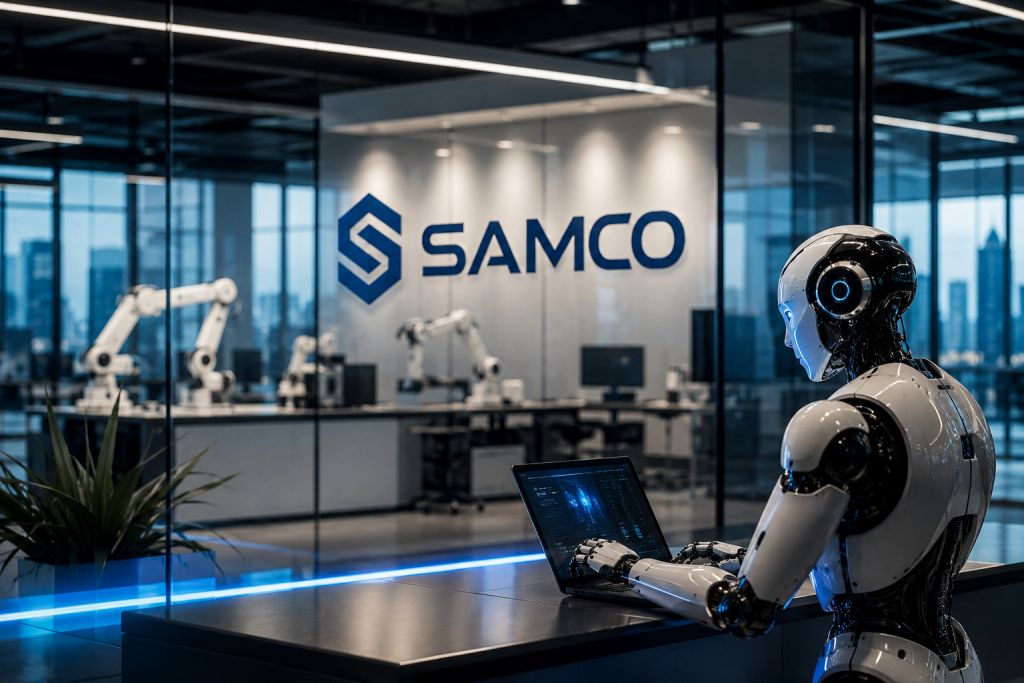
AI Consulting Services
AI consulting helps businesses move beyond experimenting with AI and create a practical plan for adoption.
SAMCO’s AI consultancy and services can help businesses assess their current readiness, identify suitable AI opportunities, prioritise use cases, evaluate technology requirements, and develop a roadmap for implementation.
Our consulting areas include:
AI readiness assessment
AI strategy
AI opportunity assessment
AI use-case discovery
Use-case prioritisation
Data readiness assessment
Technology assessment
AI roadmap development
AI/ML consulting
Business-case assessment
AI governance considerations
Implementation planning
The right consulting approach depends on the business objective, existing systems, available data, users, technical environment, and expected outcome.
Explore our AI Development Company Services
AI Readiness Assessment
Before investing in AI, a business needs to understand whether its data, technology, people, and processes are ready.
Data Readiness
We assess the information required for the proposed AI use case, including:
Available data sources
Data quality
Data accessibility
Data structure
Data requirements
Data management considerations
Good AI decisions depend on understanding what information is actually available and whether it is suitable for the intended use case.
Technology Readiness
The existing technology environment can affect how an AI initiative should be designed.
Assessment may consider:
Existing applications
APIs
Databases
Cloud infrastructure
Internal systems
Integration requirements
Security requirements
Team Readiness
Successful AI adoption also depends on people and ownership.
Considerations can include:
Internal technical capabilities
AI skills
Business ownership
Available resources
Operational responsibilities
Training requirements
Governance and Risk Readiness
AI initiatives should consider how information is accessed, managed, protected, and used.
Depending on the use case, this may include:
Data access
Security
Privacy considerations
AI governance
Human oversight
Risk management
Monitoring
AI Use-Case Discovery and Prioritisation
Many businesses have several ideas for using AI but are unsure which opportunity should come first.
AI consulting can help identify practical opportunities and evaluate them before significant development investment is made.
Identify AI Opportunities
We review business activities and challenges to identify areas where AI may provide meaningful value.
The objective is not to add AI everywhere. It is to identify problems where AI can provide a practical improvement.
Evaluate Use Cases
Potential use cases can be assessed according to:
Business impact
Feasibility
Data availability
Technical complexity
Integration requirements
Cost
Risk
Expected time to value
Prioritise AI Projects
Not every AI opportunity should be developed immediately.
Prioritisation helps determine:
- Which opportunities should be addressed first
- Which require additional data or technology preparation
- Which can be validated quickly
- Which require larger investment
- Which should be postponed or rejected
Identify Practical AI Opportunities
A good AI strategy starts with a clear business problem.
The question should be:
What business outcome are we trying to improve?
rather than:
Where can we add AI?
AI Strategy Consulting
AI strategy consulting connects business objectives with practical AI opportunities and implementation priorities.
A useful AI strategy can define:
Business objectives
AI opportunities
Priority use cases
Required data
Technology requirements
Integration requirements
Investment considerations
Implementation priorities
Success measures
The strategy should help decision-makers understand what to do next rather than simply describe artificial intelligence technologies.
AI Roadmap and Implementation Planning
An AI roadmap turns strategic priorities into a sequence of practical actions.
Phase 1 — Immediate Opportunities
Identify high-priority opportunities that can be assessed or validated first.
Phase 2 — Data and Technology Preparation
Identify requirements for:
Data
Infrastructure
APIs
Integrations
Security
Internal capabilities
Phase 3 — Pilot or Proof of Concept
Where appropriate, validate a selected use case before committing to a larger production implementation.
Phase 4 — Production Implementation
Define the technical and operational requirements for moving a validated initiative into production.
Phase 5 — Scale and Optimise
Determine how successful AI initiatives can be expanded, monitored, and improved.
A roadmap should reflect the business’s priorities, available resources, technical environment, and expected value.
AI/ML Consulting
AI ML consulting can help businesses determine whether machine learning is appropriate for a particular business problem.
The consulting process may consider:
Machine-learning use cases
Data availability
Data quality
Model requirements
Technical feasibility
Evaluation requirements
Deployment considerations
Ongoing monitoring
Machine learning should be considered when the available data and business problem support a meaningful predictive or analytical application.
AI Technology and Vendor Assessment
Businesses often face many choices when evaluating AI platforms, models, APIs, tools, and vendors.
AI consulting can help assess options according to the actual business requirement.
Considerations may include:
Required AI capabilities
Integration requirements
Data environment
Security
Scalability
Cost
Technical complexity
Vendor capabilities
Build-versus-buy considerations
The goal is to select an approach that fits the business rather than choosing technology simply because it is popular.
AI Business Case and ROI Assessment
AI investment should be connected to a measurable business objective.
A business case can consider:
Expected business benefit
Operational improvement
Potential revenue opportunity
Development and implementation cost
Data requirements
Integration effort
Risk
Time to value
Success metrics
This helps decision-makers compare AI opportunities and focus resources on initiatives with a reasonable business case.
No AI initiative should be treated as guaranteed to produce a particular return. The expected value should be assessed against the actual business situation.
AI Governance and Risk
AI governance should be considered before an AI initiative is scaled.
Depending on the project, governance considerations may include:
Data governance
Access controls
Privacy
Human oversight
Model evaluation
Risk assessment
Monitoring
Responsible use
The appropriate governance approach depends on the type of AI system, information involved, users, and business environment.
AI Management Consulting
AI management consulting focuses on the organisational decisions required for successful AI adoption.
This can include:
AI investment priorities
Business ownership
AI operating model
Internal capabilities
Vendor management
Change requirements
AI adoption planning
Implementation responsibilities
AI adoption is not only a technology decision. Businesses also need to determine who will own the initiative, how it will be operated, and how it fits into existing business processes.
AI Consulting Process
1. Discovery
We begin by understanding your business objectives, challenges, current processes, users, technology environment, and AI expectations.
2. Readiness Assessment
We assess data, technology, people, processes, and governance considerations relevant to the proposed AI initiative.
3. Use-Case Discovery
Potential AI opportunities are identified based on actual business requirements.
4. Prioritisation
Use cases are evaluated according to value, feasibility, complexity, data readiness, cost, and risk.
5. Strategy and Roadmap
A prioritised strategy and roadmap define what should happen next and in what order.
6. Validation
Where appropriate, a priority use case can be assessed through a proof of concept or technical validation.
7. Implementation Planning
The final stage defines the technical, operational, and business requirements for moving forward.
AI Consulting for UAE Businesses
Businesses in the UAE may have different requirements depending on their industry, systems, data environment, users, and operational model.
AI consulting can help UAE businesses assess:
Existing technology environments
Business data
AI opportunities
Arabic and English requirements where relevant
Security considerations
Integration requirements
Governance requirements
Implementation priorities
The objective is to develop an AI strategy that fits the organisation rather than applying a generic AI adoption plan.
What You Get From AI Consulting
A consulting engagement should produce practical outputs that help decision-makers move forward.
Depending on the scope, these can include:
AI readiness assessment
AI opportunity map
Prioritised AI use cases
Business-case assessment
Technology assessment
AI strategy
AI roadmap
Implementation plan
Governance recommendations
Recommended next steps
The exact deliverables depend on the scope of the consulting engagement and the business requirements being assessed.
Why Choose SAMCO for AI Consulting?
Choosing an AI consulting partner requires more than technical knowledge.
The consulting approach should connect AI opportunities with business objectives, available data, existing technology, implementation requirements, and measurable outcomes.
SAMCO focuses on:
Business-first AI assessment
Practical AI opportunities
Use-case prioritisation
AI strategy
Technical and integration considerations
Implementation-focused roadmaps
Clear next steps
UAE business requirements
The goal is to help businesses make informed AI decisions before committing significant resources to development or technology investments.
AI Consulting FAQs
What is AI consulting?
AI consulting is professional guidance that helps businesses assess AI opportunities, evaluate readiness, prioritise use cases, develop an AI strategy, and create a practical roadmap for implementation.
What does an AI consultant do?
An AI consultant can assess business requirements, identify AI opportunities, evaluate feasibility, prioritise use cases, recommend an AI strategy, and help create an implementation roadmap.
Does my business need AI consulting?
AI consulting can be useful when a business has AI ideas but needs help determining which opportunities are practical, valuable, technically feasible, or worth prioritising.
How does an AI readiness assessment work?
An AI readiness assessment considers factors such as data, existing technology, infrastructure, people, processes, security, and governance that may affect an AI initiative.
How do you identify AI use cases?
AI opportunities can be identified by reviewing business challenges, processes, available data, user requirements, and areas where AI may provide measurable value.
How do you prioritise AI projects?
Potential projects can be compared using factors such as business impact, feasibility, data readiness, complexity, cost, risk, and expected time to value.
How much does AI consulting cost in the UAE?
There is no single fixed consulting price. Cost depends on the scope, number of business areas, depth of assessment, stakeholders involved, and required deliverables.
How long does AI consulting take?
The timeline depends on the size of the organisation, number of use cases, technical environment, stakeholders, and consulting scope.
Can AI consulting lead to implementation?
Yes. Consulting can establish the strategy, priorities, technical requirements, and roadmap needed for implementation. The consulting page itself remains focused on assessment, strategy, and planning.
Not Sure Where AI Fits Your Business?
Start with the business problem—not the technology.
SAMCO can help assess your AI readiness, identify practical opportunities, prioritise use cases, and develop a roadmap for the next stage.
Discuss Your AI Requirement on WhatsApp


